8 Years With Kidney Failure: What I Learned About Creatinine, Protein and Diet


Quick answer: A lower creatinine number does not always mean your kidneys are getting better. Creatinine comes from muscle, so starving yourself of protein can push it down while your body grows weaker. After eight years of living with kidney failure, I’ve learned to track eGFR (ideally with cystatin C), eat a measured amount of mostly vegetarian protein, and trust my nephrologist over shortcuts.
By Divyanshu Malik, Founder, CareForKidney.com. I live with kidney failure. I’m a patient, not a doctor.
My story: eight years of fighting, and a childhood of feeling it
My kidney problems did not start with a diagnosis. They started long before that, in childhood, with tiredness I couldn’t explain and days when my body simply didn’t keep up with other kids. For a long time I didn’t have the words for it. Then, eight years ago, the words arrived all at once: kidney failure.
If you have heard those words yourself, or heard them about someone you love, you know the feeling. The floor tilts. Every conversation becomes about reports, numbers and diets. And one number quietly takes over your life: creatinine.
I started CareForKidney.com because of what I learned in those years. A lot of it I learned the hard way. This post is about the biggest lesson of all.
Why I became obsessed with my creatinine number
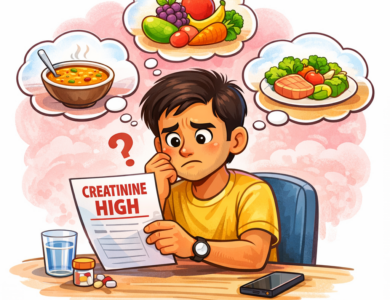
Every blood test felt like an exam result. If creatinine went up, my whole week went dark. If it went down, I felt I had “won.” Relatives, neighbours and well-meaning strangers all had advice, and most of it came down to one thing: eat less protein and the number will fall.
Some people go much further. Many kidney patients in India are told by quacks and so-called “miracle” healers to give up almost all protein and live on lauki, tinda, torai and zucchini. And honestly? The creatinine often does go down. That is exactly what makes the trap so dangerous.
What a nephrologist taught me: creatinine is an imperfect marker
My nephrologist is Dr. Ravi Bansal from PSRI Hospital in Saket, but the turning point for me was understanding why that happens. I came across this video; senior nephrologist Dr. Sanjeev Gulati, a past president of the Indian Society of Nephrology, explains it more clearly than anyone I’d heard before:
- Failing kidneys struggle to clear 40–50 different toxins, but routine tests measure only two: urea and creatinine.
- Urea and creatinine are no longer considered the gold standard. They are imperfect markers of kidney function.
- Creatinine depends on your muscle mass, how much protein you ate, and even how much water you drank the night before.
So when a patient cuts protein drastically, muscle starts breaking down, and creatinine drops artificially. The report looks better. The kidneys are not. Meanwhile, immunity falls, infections come more easily, and some patients become so weak they cannot get up or walk.
When I heard that, I recognised myself and many people I’ve met through this blog. We had been trying to fix a number instead of looking after a body.
What should kidney patients track instead of creatinine?
Track eGFR (estimated glomerular filtration rate). It estimates how much blood your kidneys filter each minute and is the standard way doctors stage chronic kidney disease (CKD).
| Test | What it tells you | Limitation |
|---|---|---|
| Serum creatinine | A rough signal of waste clearance | Swings with muscle, protein intake, and hydration |
| eGFR (creatinine-based) | Estimated % of kidney function; used for CKD staging | Less reliable if muscle mass is very low |
| eGFR with cystatin C | A more accurate estimate when muscle is low or diet is restricted | Costs more; not every lab offers it |
| DTPA (nuclear GFR) scan | The most accurate measure of GFR | Involves radiation, costly, not practical for regular checks |
If you have lost a lot of weight or muscle, or you have been on a very restricted diet, ask your nephrologist whether a cystatin C-based eGFR would give a truer picture.
How much protein should a CKD patient eat?
For many people with CKD who are not on dialysis, Dr. Gulati suggests about 0.7 g of protein per kg of body weight per day, compared with the 1.2 g/kg or more that counts as excessive. For a 60 kg adult, that is roughly 42 g of protein a day.
Important: people on dialysis usually need more protein, not less, because dialysis removes protein from the body. Your exact target depends on your stage, treatment and blood reports, so set it with your nephrologist or a renal dietitian.
Vegetarian or non-vegetarian protein: which is better for kidneys?
Mostly vegetarian. According to Dr. Gulati, plant protein is gentler and creates less acid load, while animal protein, though higher in quality, generates more acid. Extra acid in the body is linked to faster kidney damage, which is why many patients are prescribed sodium bicarbonate under medical supervision.
Kidney-friendly protein ideas I actually use:
- Dal: soak it overnight in fresh water, then cook it as dal or turn it into a dal cheela.
- Paneer: paneer paratha or paneer sabzi.
- Tofu, and a little soy flour mixed into atta.
- If you eat non-veg: fish about once a week or some chicken, but avoid red meat. Tell your doctor so they can adjust your bicarbonate dose.
Remember that potassium and phosphorus matter too, so portion sizes should come from your own reports. I wrote more about this in Can You Reduce Creatinine by Diet? The Truth for Kidney Patients.
What eight years taught me about real progress
- Don’t trick your report. A falling number from starvation is not healing. It is muscle loss wearing a disguise.
- Strength is a result too. Being able to climb stairs, work and stay free of infection matters as much as any lab value.
- Stable is a victory. With the right diet and regular follow-ups, kidney function can stay stable for years, and a slower decline buys you precious time.
- Walk away from miracle cures. Anyone who promises to “reverse” kidney failure with a secret powder is selling hope they cannot deliver.
- Your mind needs care too. Fear, anger and exhaustion are part of this illness. Talk about them.
Some days are still hard. But I no longer measure my life by one number on a report. I measure it by whether I’m strong enough to keep going, to keep learning and to keep helping the next person who searches at 2 a.m. for answers that I once searched for too.
If that person is you: you are not alone, and you are not just your creatinine.
Frequently asked questions
Can diet reduce creatinine levels?
Diet can change creatinine, mainly by changing protein intake and muscle mass, but a lower creatinine from a very low-protein diet does not mean kidney function has improved. eGFR, ideally confirmed with cystatin C, is a better guide.
Is a very low-protein diet safe for kidney patients?
No, not without medical supervision. Extreme protein restriction causes muscle loss, weak immunity and frequent infections. Most non-dialysis CKD patients do better with a measured amount, around 0.6–0.8 g/kg/day, set by their doctor.
What is a cystatin C test?
Cystatin C is a blood marker that is not affected by muscle mass. Combining it with creatinine gives a more accurate eGFR, especially in people who are thin, elderly or on restricted diets.
Do dialysis patients need less protein?
Usually the opposite. Dialysis removes protein, so most dialysis patients need more protein than non-dialysis CKD patients. Follow your renal dietitian’s target.
Can kidney failure be reversed with a special diet?
Established chronic kidney failure cannot be reversed by diet. The right diet and treatment can slow progression, keep function stable and protect your overall strength.
Disclaimer: This article shares my personal experience along with insights from a nephrologist’s public video. It is not medical advice. Please speak to your nephrologist before changing your diet or medicines.